
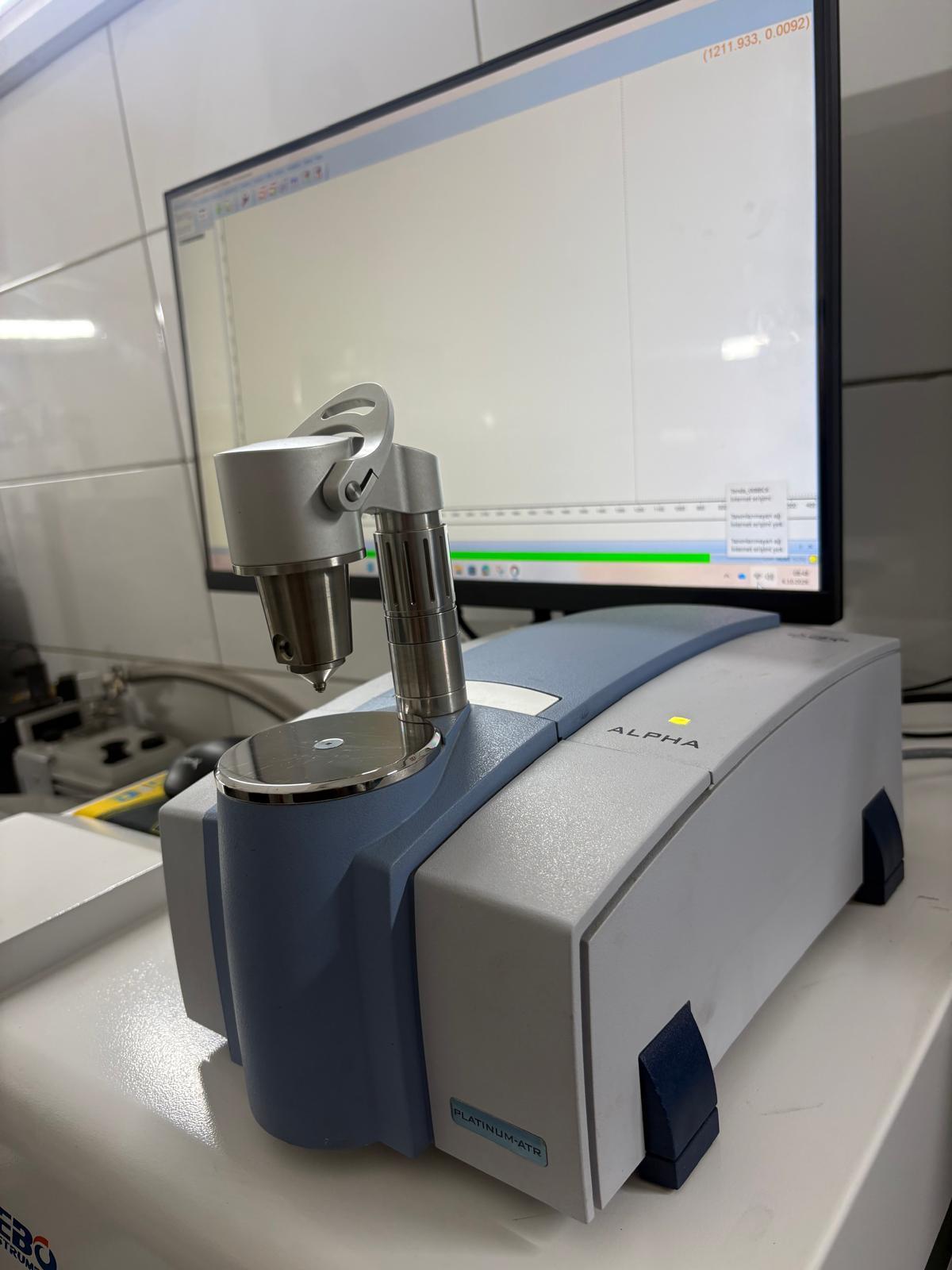
Oil and grease analysis has two purposes: identifying an unknown lubricant and monitoring the condition of an in-service oil. The spectrum of the used oil is compared with a new sample of the same oil to follow changes such as oxidation, nitration, water and glycol contamination, soot and fuel dilution. Analysis is performed on an FTIR (Fourier transform infrared) spectrometer using the ATR (attenuated total reflection) technique; solid, liquid, paste and film samples are usually measured without preparation. The spectrum is compared with reference libraries to identify the material.
Determined
- Oil and grease type (mineral, synthetic ester, PAO, silicone, PAG etc.) and additive groups
- Oxidation and nitration in used oil
- Presence of water, glycol (antifreeze) and soot
- Comparison of new and used oil
Reference Standards
- ASTM E2412 – Condition monitoring of in-service petroleum and hydrocarbon-based lubricants by FTIR
- ASTM D7414 – Condition monitoring of oxidation in in-service lubricants by FTIR
Samples
Sending a new (unused) sample of the same oil together with the used oil improves the accuracy of the evaluation. Samples should be sent in clean, capped containers.