
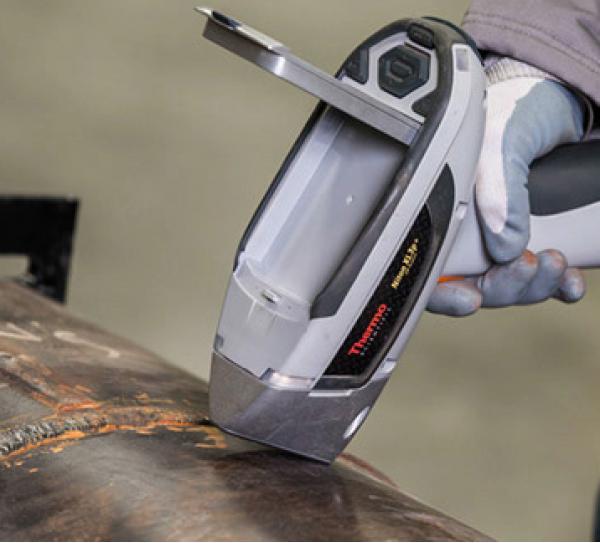
X-rays are a method used for elemental analysis and chemical analysis. The main advantages of this method are short analysis time, sensitivity, ease of use, non-destructive examination method and low cost equipment.
Atoms of materials exposed to X-rays become ionized. Ionized atoms lose one or more electrons. High-energy x-rays can allow electrons to be removed from the atoms´ inner orbits. Electron loss from the inner orbit causes a gap to form in this orbit and the electrons in the upper orbitals fill this gap. In this case, energy is released in the form of photons corresponding to the energy difference between the two orbitals. This radiation is carried out in the form of radiation with the characteristic energy of the atoms in the material. By determining these energies, the material is characterized quantitatively and qualitatively.
Positive Material Identification (XRF) Types
Nickel Alloy XRF Analysis
Chemical analysis of nickel-base alloys by X-ray fluorescence spectrometry to ASTM E2465.
Coating Weight of Metallic-Coated Steel by XRF
Coating weight (mass) of steel coated with metallic materials by X-ray fluorescence to ASTM A754/A754M.
Titanium Alloy XRF Analysis
Chemical analysis of titanium alloys by X-ray fluorescence spectrometry to ASTM E539.
Carbon and Low-Alloy Steel XRF Analysis
Chemical analysis of carbon and low-alloy steels by X-ray fluorescence spectrometry to ASTM E1085.
Stainless and Alloy Steel XRF Analysis
Chemical analysis of stainless and alloy steels by X-ray fluorescence spectrometry to ASTM E572.